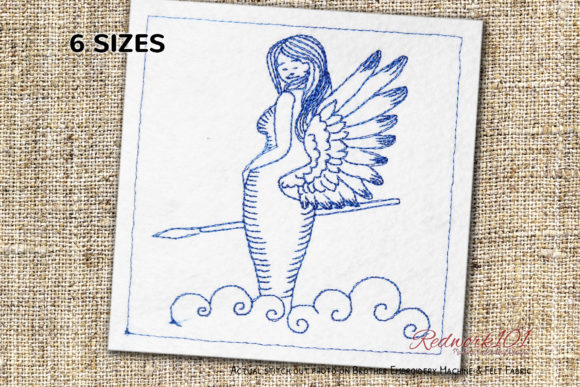
Archangels Redwork: A Designer’s Review for Branding
As an embroidery designer who has spent years digitizing and reviewing files for commercial use, I approach every new machine embroidery design with a critical eye. It is not just about whether the image looks pretty on a screen; it is about how that design performs when stitched onto real fabric, worn by staff, or sold as part of a small business merch line. Recently, I evaluated Archangels Redwork, a piece rooted in Religion and traditional Embroidery aesthetics, to determine its viability for modern branded applications. This review focuses on practical utility for boutique owners, apparel decorators, and handmade brands looking to elevate their product offerings.
First Impressions and Visual Personality
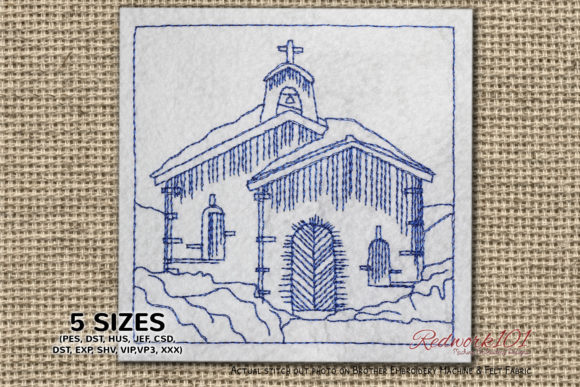
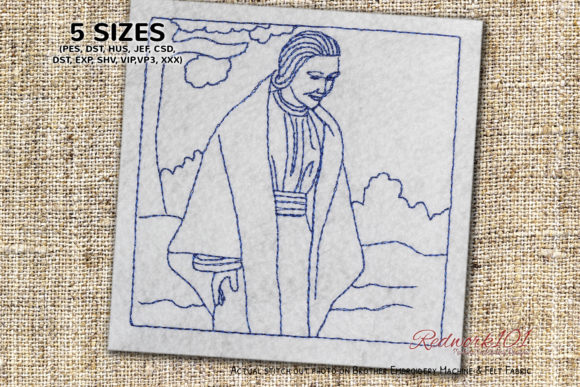
The immediate impression of Archangels Redwork is one of classic elegance and timeless simplicity. Redwork, historically known for its single-color stitching on white or neutral backgrounds, carries a rustic yet refined charm. For a small business, this aesthetic can signal authenticity, heritage, and attention to detail. Unlike complex multi-color designs that can sometimes appear cluttered on small items, this design relies on strong outlines and negative space. It feels professional and decorative without being overly busy. The optional Box Stitch mentioned in the product description adds a layer of versatility, allowing designers to frame the motif or leave it open for a more organic look. This flexibility is crucial for brand identity, as it allows the design to adapt to different brand voices, from playful to premium.
Real-World Applications for Small Businesses
When considering where to apply Archangels Redwork, the possibilities extend far beyond simple decoration. For a local café or bakery, this design works exceptionally well as an apron embroidery accent. The single-color nature of redwork ensures that the design remains legible even after repeated industrial washing, which is a common pain point for food service uniforms. The clean lines prevent the "muddy" look that often plagues dense, multi-colored logos on textured apron fabrics.
For retail boutiques and creative studios, this design is ideal for custom apparel such as tote bags and caps. A tote bag design featuring this motif can serve as a subtle nod to craftsmanship, appealing to customers who value handmade quality. In the context of cap embroidery, the design’s structure needs careful placement. If the archangel figure is detailed, it may require a larger hoop or a simplified version to maintain clarity on the curved surface of a baseball cap. However, if used as a sleeve detail or a chest pocket accent on work shirts, the scale is often perfect, providing a sophisticated touch that enhances perceived value.
Etsy sellers and crafters can leverage this digital embroidery file to create unique embroidered patch products. Patches are a low-risk, high-margin item for handmade brands. By stitching Archangels Redwork onto twill or felt backings, creators can offer customizable merchandise that customers can iron or sew onto jackets, backpacks, and hats. This transforms a static design into an interactive finished product that boosts buyer engagement.
Navigating Technical Challenges and Fabric Constraints
While the aesthetic appeal is strong, technical execution requires diligence. One must consider stitch density and thread colors. Since redwork traditionally uses a single thread color, contrast is key. On dark uniforms or navy blue caps, a bright red or white thread will pop, but on light beige linen, the same red might lack definition. I always advise testing the design in black and white first to check for structural integrity before committing to specific brand colors. This helps identify if any lines are too thin or if gaps are too wide, which could cause fabric puckering.
The product description notes that the outer Box Stitch is optional and that the color of the outer box differs in most designs unless it is part of the design itself. This is a critical detail for production. If you skip the box color, ensure that the remaining elements still form a cohesive shape. For items with frequent washing, such as staff uniforms, skipping the box might reduce stitch count and improve durability, but it could also make the design feel incomplete if the central figure relies on that frame for balance. Always inspect spacing and confirm hoop size compatibility. A design that fits perfectly in a 4x4 inch hoop may need resizing for a 5x7 application, which can alter stitch density and potentially cause thread breaks if not adjusted properly.
Fabric texture also plays a significant role. On smooth cotton or poly-blends, Archangels Redwork will appear crisp and clean. However, on textured fabrics like terry cloth towels or heavy canvas, the fine details might get lost. In these cases, using a cut-away stabilizer is essential to provide a firm foundation. For delicate fabrics, a tear-away stabilizer might suffice, but testing on a scrap piece is non-negotiable. Never assume a digital embroidery file will perform identically across all materials.
Enhancing Brand Identity and Customer Trust
Incorporating Archangels Redwork into your product line does more than add visual interest; it strengthens brand identity. Consistent use of high-quality embroidery signals professionalism and care. Customers associate well-executed stitching with durability and premium quality. Whether used as a subtle logo accent on packaging or a prominent feature on a best-selling item, this design can enhance recognition. For businesses in the religious or spiritual niche, this motif resonates deeply with target audiences, fostering trust and community connection. For secular brands, the artistic merit of the redwork style conveys a sense of tradition and artisanal skill.
To maximize impact, create a printable mockup for client approval or social media previews. Seeing the design on a realistic garment or accessory helps customers visualize the finished product. Compare Archangels Redwork beside other design assets in your portfolio to ensure visual consistency. If your brand leans towards modern minimalism, this classic style might need to be paired with contemporary typography to bridge the gap. If your brand is rustic or vintage, it will blend seamlessly.
Practical Designer Notes for Production
- Test Before Production: Always stitch out a sample on the actual fabric you intend to use. Check for puckering, thread breaks, and color fastness.
- Verify Licensing: Confirm commercial licensing terms before using Archangels Redwork for goods you plan to sell. Not all digital embroidery file purchases include unlimited commercial rights.
- Check File Details: The product description mentions optional box stitches and variable colors. Ensure you have the correct file format for your machine and understand how to toggle these options in your editing software.
- Optimize for Size: If using for small patches, simplify the design if necessary. Tiny lettering or intricate details may not stitch out clearly at reduced sizes.
- Stabilizer Selection: Match your stabilizer to the fabric weight. Heavy denim needs different support than lightweight chiffon.
- Thread Quality: Use high-quality rayon or polyester threads to ensure shine and durability, especially for items that will be washed frequently.
In conclusion, Archangels Redwork is a versatile and aesthetically pleasing addition to any embroidery designer’s library. Its strength lies in its simplicity and adaptability. For small business owners, it offers a way to create distinctive, high-value merchandise that stands out in a crowded market. By paying attention to technical details like stabilizer choice, thread contrast, and hoop size, you can transform this digital embroidery file into a powerful tool for commercial embroidery success. Whether adorning a boutique tote bag or a café apron, this design delivers both beauty and functionality, making it a worthy investment for your design assets.